When a patient asks me about radiofrequency ablation, they are usually tired. Tired of waking up stiff, tired of standing through meetings with a burn in the low back, tired of living around a neck that punishes every head turn. Radiofrequency ablation, or RFA, is not a magic wand, but in carefully selected people it can quiet the right nerve long enough to let you move, strengthen, and resume the parts of life that chronic pain has been crowding out. As a pain management physician who has performed thousands of these procedures, I want to demystify what RFA is, when it works, and what to expect from an experienced interventional pain specialist doctor.
What radiofrequency ablation is, and what it isn’t
RFA uses controlled heat, generated by radiofrequency energy, to disrupt small nerve branches that carry pain signals. For the spine, we most often target medial branch nerves that supply the facet joints in the neck and back, or lateral branches that supply the sacroiliac joint. There is also pulsed radiofrequency, which uses lower temperatures and a different waveform with the aim of modulating rather than destroying nerve function, but classical thermal RFA remains the workhorse for facet-mediated pain.
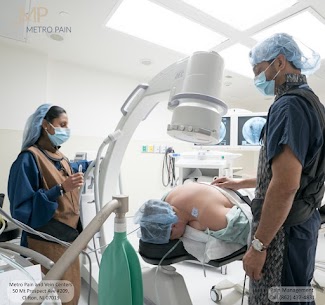
It is a local procedure, typically done under live X-ray guidance. I numb the skin and deeper tissues, place a specialized needle near the target nerve, confirm correct placement with imaging and sensory testing, then apply heat at about 80 degrees Celsius for 60 to 90 seconds. The heat creates a small, precisely placed lesion around the needle tip. The nerve fibers that carry pain impulses stop conducting. The joint still exists and the spine still moves, but the pain signal is dramatically reduced.
What it is not: RFA does not treat a herniated disc pressuring a nerve root, it does not fuse bones, and it does not cure arthritis. It reduces pain from specific pain generators so you can do more with less symptom burden.
Who tends to benefit
Patterns matter. A pain management expert physician will spend most of the visit listening and examining before talking about needles. The typical RFA candidate describes deep, aching pain next to the spine that worsens with extension or standing, sometimes with a dull referral to the buttock or shoulder blade region, and only rarely down the arm or leg. Movements that load the facet joints, like leaning back or rotating, are often provocative. Imaging can support the story, but MRI findings of degenerative change are common and do not prove the pain is coming from those joints.
We do not guess. We confirm the source with diagnostic blocks. These are targeted numbing injections of the medial branch nerves. If you walk in with an 8 out of 10, walk out with a 2, and stay that way for the hours that the local anesthetic should work, that is meaningful. Because placebo response and false positives exist, most board certified pain management doctors will repeat the block using a different anesthetic with a different duration. Consistent relief across two blocks that matches the drug’s expected time course flags a good RFA candidate. When I trained, we were taught to aim for at least 50 percent relief; in practice, I counsel patients that better than 70 percent and functionally noticeable relief gives the strongest predictive value.
Beyond spine joints, RFA can help certain chronic knee or hip pain cases after arthritic wear, and sacroiliac joint pain where lateral branches are the culprit. It also plays a role for some nerve entrapments and for cancer-related pain in specialized settings. Not everything is a fit. A pain management doctor for sciatica that comes from a fresh disc herniation will almost always start with other options such as physical therapy, anti-inflammatories, epidural injection by an epidural injection pain doctor, and time, because the natural history often favors improvement without ablating anything.
The decision-making conversation I have in clinic
A good pain management consultation doctor knows real life rarely matches textbook diagrams. I ask about work demands, sleep, and the exercises you can and cannot do. I look for red flags like fever, sudden weakness, bowel or bladder changes, or unexplained weight loss that would steer us toward urgent imaging or referral. I review medications to minimize risks, especially anticoagulants that change the bleeding profile for spine procedures.
Then I explain trade-offs. RFA offers durability that a simple steroid injection cannot. Facet steroid injections, done by a spinal injection pain doctor, may quiet an inflamed joint for weeks or a few months. Diagnostic blocks are not intended as treatment, just confirmation. RFA, when the diagnosis is right, often gives relief measured in seasons, not days. On the other hand, RFA does not help if the wrong structure is targeted. Back pain is more than one thing. If your pain stems from discogenic sources, vertebrogenic endplate changes, myofascial trigger points, or a compressed nerve root, a different interventional plan is better.
This is where a comprehensive pain management doctor earns their keep. An interventional pain management doctor who listens carefully and tests methodically prevents you from having the wrong procedure for the right symptoms.
What the day of the procedure is like
Most RFA sessions are outpatient, completed in 30 to 60 minutes. You arrive fasting if light sedation is planned. A pain management anesthesiologist or nurse administers local anesthesia with or without a small dose of medicine to help you relax, but you are awake enough to provide feedback during nerve testing. We position you on a procedure table, clean the skin, and use fluoroscopy to see landmarks. Every step is deliberate. I use sensory and motor stimulation to verify that the needle is near the pain-carrying branch and not close to a motor nerve. Patients feel a mild buzzing or tapping, and I adjust until the pattern matches the target anatomy and no limb or deeper muscle twitch occurs.
After precise placement, I numb the area around the probe, then deliver heat. You do not feel burning, because the local anesthetic is already working. Each lesion takes about a minute. For a typical lumbar medial branch RFA, we treat two to three levels on both sides, so there are several lesions, often eight to twelve in total. Afterward, we watch you briefly, review post-care, and you go home with a driver if you had sedation.
The first two weeks: what to expect
The most common surprise is the stepwise nature of relief. The numbing medicine wears off the day of the procedure, and a soreness sets in that can feel like a bruise or sunburn at the targeted area. This lasts a few days. Ice packs and oral anti-inflammatories help if your stomach and kidney function allow their use. I ask people to avoid heavy bending and twisting for 24 to 48 hours. Some patients feel patches of numbness or tingling near the skin over the treated zone; this often fades as the tissues settle.
Pain relief builds over one to three weeks as the nerve fibers stop sending signals and your nervous system adapts. People sometimes report a clear morning where they get out of bed and realize they can stand up straight without bracing. That moment, even if it took a dozen days to arrive, is why many chronic pain specialists value this procedure.
How long RFA lasts, and what happens next
Nerves regrow. That is not a failure, it is biology. After a successful radiofrequency ablation, medial branch nerves typically regenerate over 6 to 18 months. I tell patients to expect 6 to 12 months of improvement on average, with some outliers enjoying two years. Relief waxes and wanes, and activities, stress, and sleep all influence the experience. If your pain returns and the pattern matches the original, repeating RFA is reasonable. In my practice, repeat procedures often work as well as the first.
This time window is a gift. We use the months of lower pain to rebuild strength and endurance. A pain management and rehabilitation doctor or physical therapist designs a plan to restore lumbar extension tolerance, hip hinge mechanics, and deep core endurance. The best outcomes come when patients use the reprieve to change the way the spine is loaded over the long term.
Safety profile and real risks
Every procedure has risks. Compared to surgery, RFA’s complication rate is low. Infection is rare, especially with sterile technique and brief procedure time. Bleeding risk is small but not zero, so anticoagulant management is critical. Transient numbness or increased pain can occur. A neuritic flare, where the treated region is more sensitive for days to a couple of weeks, is uncommon but memorable; I prepare patients for this and treat it with ice, a short course of anti-inflammatories, and reassurance.
A more significant risk, loss of motor function, is avoided through anatomical targeting and motor testing. The medial branch nerves are primarily sensory to the joint capsule and small postural muscles, so destructive motor changes are not expected when the needle is placed correctly. If anything feels off, a prudent pain treatment doctor pauses and repositions. Sedation is light so feedback is reliable.
Patients with uncontrolled diabetes, severe cardiopulmonary disease, active infection, or pregnancy need individualized planning. A multidisciplinary pain management doctor will coordinate with primary care, cardiology, or obstetrics to time or modify interventions safely.
Not all needles are equal: the value of a skilled operator
Skill shows up in the small decisions. Needle trajectory, the exact target on the transverse process, parallel alignment along the nerve’s expected course, and the choice to create multiple overlapping lesions all influence durability. A board certified pain management doctor should be comfortable explaining their technique and outcomes. When I inherited a patient who failed an outside RFA, I request the prior procedure note and imaging. If the lesions were shallow or sparse, repeating with improved technique can change the story.
Technology has evolved too. Cooled RFA systems create larger spherical lesions and can be useful for certain targets like the sacroiliac joint lateral branches. Conventional thermal RFA remains the standard for lumbar and cervical medial branches. Pulsed radiofrequency, at lower temperatures, may be preferred near mixed sensory-motor nerves to reduce risk. An advanced pain management doctor selects the modality that matches the anatomy and the clinical priorities.
Where RFA sits among other options
A pain management doctor for back pain should be comfortable with the entire spectrum of nonoperative care. RFA is one part of a broader toolkit.
Conservative care remains the foundation. This includes education about load management, graded activity, sleep quality, and mood. Physical therapy that emphasizes hip mobility and core endurance, not just generic stretching, makes a difference. A non surgical pain management doctor can combine these with topical agents, anti-inflammatories, and nerve-stabilizing medications when appropriate. Opioids are not a long-term solution for mechanical spine pain, and an opioid alternative pain doctor can design strategies that lower reliance, not increase it.
Epidural steroid injections target nerve root inflammation from disc herniation or stenosis, not facet pain. A nerve block pain doctor might use selective nerve root blocks to clarify diagnosis when radicular symptoms dominate. For vertebrogenic pain associated with Modic changes, basivertebral nerve ablation is a different procedure with different indications. For SI joint pain, lateral branch RFA, SI joint injections, or even SI joint fusion in refractory cases all enter the conversation. A pain management and spine doctor should help you navigate, not push a single tool.
Surgery has a place. Progressive neurological deficits, cauda equina symptoms, structural instability, or intractable pain tied to a surgically addressable lesion are reasons to meet a spine surgeon. A pain management and orthopedics doctor collaborates rather than competes. RFA can still play a role before or after surgery for persistent facet-driven pain.
An example from practice
A 56-year-old warehouse manager came in with years of low back pain that worsened while standing in one spot. He could lift with a hip hinge, but prolonged extension at the line scanner was brutal. MRI showed multilevel degenerative changes that read like a grocery list. On exam, extension and rotation reproduced his pain, straight leg raise was negative, and strength and reflexes were normal. We performed two diagnostic medial branch blocks at L3 through L5, each time turning an 8 into a 2 for the expected duration of the anesthetic. He returned a week after lumbar RFA and said he was sore but optimistic. By week three, he was standing through full shifts without breaks, and he started a posterior-chain strengthening program. His relief lasted 14 months. When pain crept back, he recognized the pattern and we repeated the procedure successfully. He never needed opioids and avoided surgery.
Special situations: neck pain, headaches, and the sacroiliac joint
Cervical facet joints are frequent culprits in neck pain that radiates into the shoulder or upper back, especially after whiplash. Diagnostic medial branch blocks at C3 through C6 can reveal this pattern. Cervical RFA requires meticulous technique because the anatomy is more compact and the vertebral artery is nearby. In experienced hands, patients often report smoother head turns and fewer end-of-day headaches. For true migraines, RFA is not a standard therapy, though occipital nerve procedures and neuromodulation can assist selected cases. A pain management doctor for headaches differentiates primary headaches from cervicogenic headaches where facet RFA applies.
The sacroiliac joint deserves separate mention. Pain low and to one side, worse with standing from a chair or rolling in bed, sometimes points to the SI joint. Diagnostic injections into the joint itself, or lateral branch blocks along the sacrum, guide decision-making. Cooled RFA of the lateral branches can provide months of relief when the pattern fits. Many patients have blended pain from lumbar facets and the SI joint. A pain management practice doctor should be prepared to stage or combine treatments strategically.
How to prepare, and how to choose your specialist
Patients often ask what they can do to improve outcomes. Arrive well rested, hydrated, and with realistic goals. If you smoke, quitting now helps overall tissue healing and long-term spine health. Keep a pain diary between diagnostic blocks. Note the hours of relief and what you could do during that time. Bring that information to your pain management evaluation doctor; it makes the decision clearer.
Choosing the right pain management provider matters. Look for a pain medicine physician who is fellowship trained in interventional pain and board certified. Experience with the specific procedure you are considering is essential. Ask how they confirm diagnosis, what landmarks they use, whether they perform sensory and motor testing, and how many lesions they create per level. A medical pain management doctor who gives nuanced answers and sets balanced expectations is a safer guide than one promising guaranteed outcomes.
If you are searching online for a pain management doctor near me, read beyond star ratings. Patient reviews can reflect bedside manner more than technical skill, yet both matter. A pain management consultant who collaborates with physical therapists, primary care, and, when needed, spine surgeons usually offers more comprehensive care. Geography matters less than finding the best pain management doctor for your specific condition, even if it means one or two extra miles.
Costs, insurance, and practicalities
Most insurers cover RFA for facet-mediated pain when diagnostic blocks have demonstrated clear benefit. They often require two blocks with documented relief thresholds before approving ablation. Discuss copays and deductibles with your clinic. A pain management services doctor’s office should help navigate prior authorizations and scheduling. If you pay cash, ask for an itemized estimate; pricing varies widely across regions and facilities.
Plan a light schedule the day of the procedure and the day after if you can. You can usually return to desk work within 24 hours and to more physical tasks as soreness eases. I counsel patients to resume exercise within a week, starting with low-load, high-repetition movements that restore coordination and endurance.
Common myths I hear, and the facts
- Myth: RFA burns your spinal cord. Fact: The lesions are tiny and placed outside the spinal canal, adjacent to small sensory branches under precise imaging. Myth: If the nerve grows back, pain will be worse. Fact: Nerve regeneration restores baseline function; it does not magnify pain. Many patients repeat RFA with similar benefit. Myth: RFA leads to joint damage because you cannot feel pain. Fact: The facet joints still have structural limits, and you still feel pressure and stretch through other pathways. With guided rehab, patients move better and often protect joints more effectively.
When I advise against RFA
If your pain is diffuse, migratory, and not tied to specific joint loading, or if your relief from diagnostic blocks is inconsistent or minimal, I steer away. For primarily discogenic pain, vertebrogenic pain, or clear radiculopathy, other interventions have stronger evidence. If untreated depression, severe deconditioning, or opioid dependence dominates the clinical picture, we address those first. A holistic pain management doctor treats the person, not just the joint.
The bigger aim: control, not just relief
The goal of any interventional pain specialist doctor is to open a window for change. RFA can lower the volume on facet or SI joint pain long enough for you to train, sleep, and work without constant threat signals from your back or neck. It fits best within a plan that includes education, movement, and, when needed, weight management, ergonomics, and stress skills. A long term pain management doctor thinks in seasons and years, not just appointment slots.
If your story suggests facet or SI joint pain, talk with a pain control doctor who takes the time to Clifton pain management doctor confirm the diagnosis and walk through options. Ask the questions that matter. Measure what changes in your life with each step. The right procedure, at the right time, by the right hands, can give you back the space to live on your terms.